
Acne Awareness Month: How to Treat Acne at the Source
June is Acne Awareness Month, and if you search around for what that actually means, you’ll find dozens of articles that all say roughly the same thing: here are the four types of acne, here are some causes, here are some ingredients, go see an esthetician or dermatologist. All true. None of it tells you why your own skincare routine might be working against you.
After years of working with clients in our Scottsdale med spa, we’ve noticed something most acne content skips entirely: most breakouts have an identifiable source, and most at-home routines are built to manage symptoms instead of that source. That’s why someone can spend a year cycling through cleansers, spot treatments, and “purifying” masks and still break out in the exact same spots. This post is about identifying the source first, then matching the right approach to it.
Why “just use salicylic acid” doesn’t fix everything
Acne isn’t a single condition. It’s a visible result of a few different things happening underneath the skin, sometimes at the same time. A breakout along the jawline that flares before a menstrual cycle has a different driver than a cluster of small bumps across the forehead that shows up after switching sunscreens, and both of those are different again from the deep, tender bumps that never seem to come to a head.
Treating all three the same way, usually with the same over-the-counter acne wash and the same spot treatment, is why progress stalls. Before reaching for another product, it helps to ask: what is actually causing this, in this location, at this time?
Four sources behind most adult breakouts
We’re intentionally not leading with the standard “comedonal, inflammatory, nodular, cystic” list, because that classifies what a breakout looks like, not why it’s happening. In practice, most of the breakouts we see in clients fall into one (or a combination) of these four categories.
1. Hormonal acne
Shows up along the jawline, chin, and lower cheeks, often as deeper, tender bumps that follow a monthly cycle. Hormonal fluctuations increase oil (sebum) production and change how that oil behaves in the pore, which is why this type tends to resist topical treatment alone and responds better to a combination of professional skincare and, for some people, a conversation with their physician about hormonal options.
2. Product and congestion-driven acne
Small, consistent bumps and clogged pores, often across the forehead, hairline, or anywhere a heavy moisturizer, sunscreen, or hair product sits on the skin for hours. This is one of the most common sources we see and one of the easiest to overlook, because the products causing it are often marketed as “good for your skin.” A rich SPF that’s perfect for a day on the golf course can be exactly the wrong texture for someone prone to clogged pores.
3. Environmental and climate-driven acne
This one is genuinely regional. Scottsdale’s heat, dry air, and intense sun exposure push people toward two extremes: either over-cleansing and over-exfoliating to fight the “shiny by 10am” feeling, which strips the skin and triggers a rebound in oil production, or layering on heavier, occlusive products to compensate for dryness, which clogs pores. Add hard water, which can leave a mineral residue that interferes with fully rinsing products off the skin, and you have a recipe for breakouts that has nothing to do with diet or hormones.
4. Bacterial and inflammatory acne
Red, swollen pimples and pustules, sometimes with whiteheads, caused by Cutibacterium acnes bacteria multiplying inside clogged follicles and triggering an immune response. This is the category that responds best to ingredients like benzoyl peroxide and, in more severe or persistent cases, prescription options from a physician.
Most people we work with have some overlap, often a hormonal pattern along the jawline plus congestion across the T-zone from sunscreen. That overlap is exactly why a single product or a single “acne kit” rarely solves the whole picture.
The ingredients that match each source
Once you have a sense of what’s driving your breakouts, the ingredient conversation gets a lot simpler:
- Salicylic acid is oil-soluble, which lets it get into the pore lining and break up the buildup of oil and dead skin cells. It’s a strong fit for congestion-driven and environmental acne.
- Benzoyl peroxide works by reducing acne-causing bacteria on the skin. It’s most useful for the bacterial and inflammatory category, particularly papules and pustules.
- Retinoids (over-the-counter retinol or prescription tretinoin/adapalene) normalize how skin cells shed inside the follicle, which helps prevent new clogs from forming in the first place. They’re a long-game tool, useful across nearly all four sources, but they’re also the ingredient most likely to cause irritation if introduced too quickly.
- Azelaic acid is a gentler option that helps unclog pores, calm inflammation, and fade the dark marks acne can leave behind, often a good fit for sensitive or reactive skin that doesn’t tolerate benzoyl peroxide well.
The American Academy of Dermatology’s overview of acne treatments is a solid reference if you want more detail on how each of these works and where prescription options fit in.
The mistake we see constantly: stacking too many actives
This is the one piece of advice almost no acne article includes, and it’s probably the single most common issue we see in client consultations. Someone with a breakout reads that salicylic acid, benzoyl peroxide, and retinol all help with acne, so they introduce all three at once, sometimes alongside a vitamin C serum and a physical scrub for good measure.
The skin doesn’t read it as “extra acne-fighting power.” It reads it as an attack. The result is a compromised skin barrier: redness, tightness, flaking, and very often more breakouts, because a damaged barrier can’t regulate oil production properly. At that point, someone might add yet another product to deal with the new irritation, and the cycle continues.
The fix is almost always to simplify first. One active ingredient at a time, introduced gradually, gives the skin a chance to adjust and gives you a chance to actually see what’s working.
Purging or reacting? How to tell the difference
This is the question we get asked more than almost any other when someone starts a new acne routine, and it’s rarely addressed clearly. When you introduce an ingredient like a retinoid or a higher-strength exfoliating acid, it’s common to see more breakouts in the first few weeks before things improve. This is often called “purging,” and it happens because the ingredient speeds up cell turnover, bringing existing congestion to the surface faster.
A few things to look for:
- Purging tends to show up in areas where you already get breakouts, follows roughly the same timeline as your normal acne cycle (often resolving within 4 to 6 weeks), and the bumps look similar to your usual breakouts, just more of them.
- A reaction tends to show up in new areas, comes with burning, stinging, or visible redness that wasn’t there before, and doesn’t follow a “gets worse then better” pattern; it just keeps being uncomfortable.
If you’re not sure which one you’re seeing, that’s a reasonable moment to bring in a professional rather than guessing, especially before you’ve invested weeks into a routine that might be doing more harm than good.
Lifestyle factors worth paying attention to
The lifestyle advice in most acne articles isn’t wrong, it’s just often presented as the main event when it’s really a supporting factor. A few that genuinely matter:
- Diet: research has linked high-glycemic foods and dairy to increased acne severity in some people, though the relationship varies from person to person. A generally balanced diet with less added sugar is a reasonable, low-risk place to start.
- Sleep and stress: both affect cortisol levels, which in turn influence oil production. This is part of why stressful periods so often line up with breakout flares.
- Touch and friction: phones, helmets, masks, and resting your chin in your hands all transfer oil and bacteria. In our climate, sweat from outdoor activity adds another layer to this, so a quick cleanse after a workout or time outside matters more here than it might in cooler climates.
- Pillowcases and towels: changing these every few days removes a buildup of oil and product residue that can otherwise sit against the skin all night.
None of these will resolve hormonal or congestion-driven acne on their own, but they remove background noise that makes everything else harder.
When at-home care isn’t enough
If you’ve identified your likely source, simplified your routine, given it a few weeks to settle, and you’re still not seeing the improvement you’d expect, that’s usually a sign the acne needs more than an at-home product swap. This is especially true for hormonal and cystic acne, which often respond slowly (or not at all) to over-the-counter products alone.
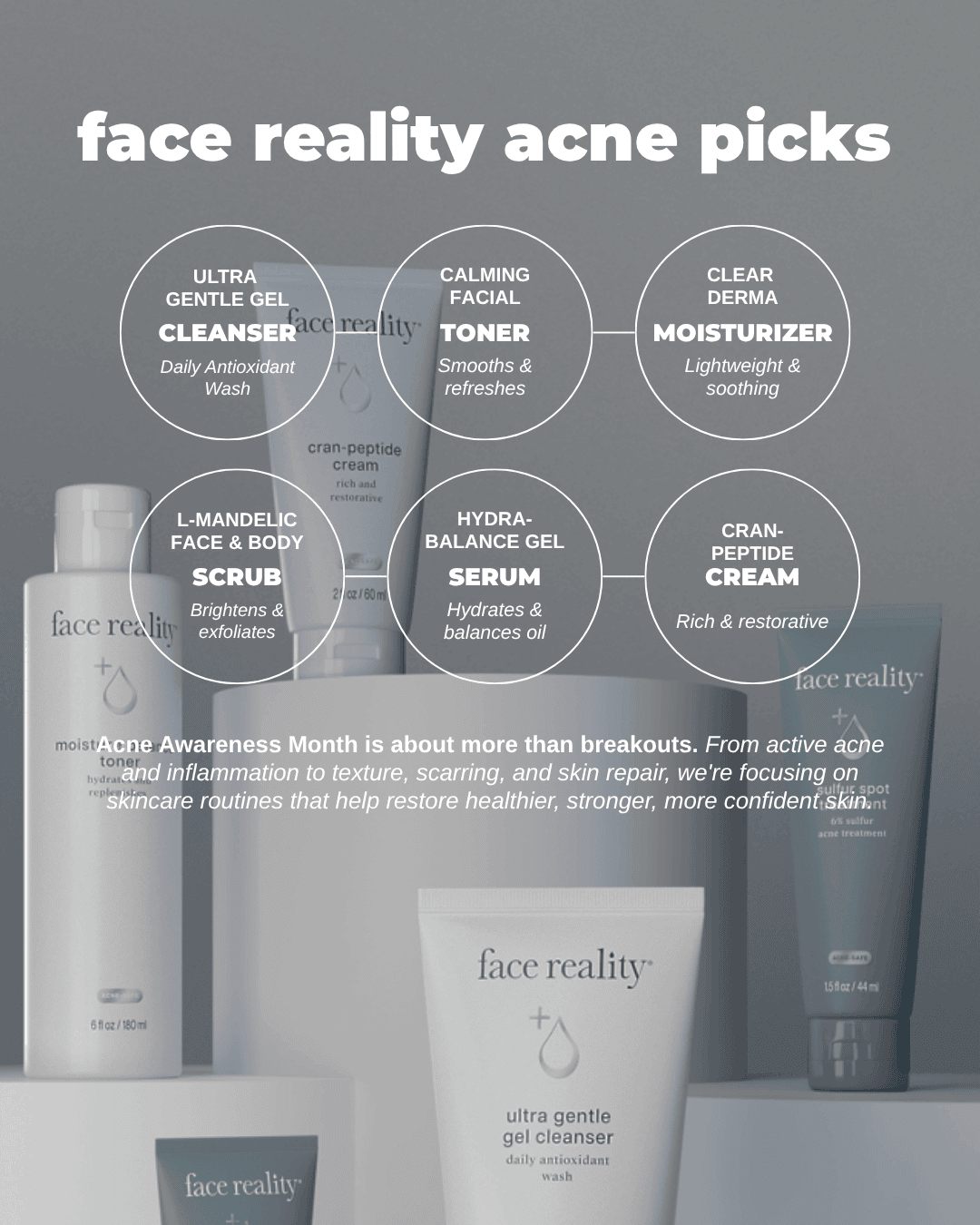
This is where a professional, source-specific approach makes a real difference. At Skin Savvy Aesthetics, our Face Reality Acne Bootcamp in Scottsdale starts with a consultation to identify what’s actually driving your breakouts, then builds a treatment plan and skincare routine around that, with bi-weekly in-office visits and ongoing adjustments as your skin responds. Most clients begin seeing improvement within 4 to 6 weeks, with more significant results over 3 to 4 months of consistent treatment.
For acne that’s left behind textural changes or dark marks once breakouts are under control, treatments like microneedling or a Perfect Peel can be useful next steps, but these are most effective once active breakouts are calmer, not as a substitute for addressing the source.
If persistent acne is also affecting your skin’s overall texture and you’re not sure where to start, a consultation is a good first step. You can also browse our advanced facials if you’re looking for a gentler, lower-commitment option while you sort out the bigger picture.
Frequently asked questions
When is Acne Awareness Month?
Acne Awareness Month is observed every June. Dermatology practices, professional organizations, and skincare brands use the month to share education about acne causes, treatment options, and the importance of professional care for persistent breakouts.
What is Acne Awareness Month?
It’s an annual awareness campaign focused on acne, one of the most common skin conditions, affecting people of all ages, not just teenagers. The goal is to reduce stigma, correct common misconceptions, and encourage people dealing with ongoing acne to seek evidence-based treatment rather than relying on trial-and-error with over-the-counter products alone.
Can diet really affect acne?
For some people, yes. Diet isn’t the root cause of acne for everyone, but high-glycemic foods and dairy have been associated with increased acne severity in some studies. If you suspect a dietary trigger, it’s worth tracking over a few weeks alongside, not instead of, a proper skincare routine.
How long does it take to see results from professional acne treatment?
This varies by acne type and severity, but most people on a consistent professional treatment plan begin to notice improvement within 4 to 6 weeks, with more significant changes typically appearing over 3 to 4 months.
Is professional treatment worth it for mild acne?
It depends on how long the acne has been present and whether at-home products have made a meaningful difference. If mild acne has persisted for months despite a reasonable routine, a professional assessment can help identify the underlying cause before it becomes more severe or leaves lasting marks.
If you’re dealing with breakouts that haven’t responded to the usual advice, the team at Skin Savvy Aesthetics is happy to take a look and help you figure out what’s actually going on, not just what’s on the surface.